
The United States is facing an energy crisis. Outdated grids, cybersecurity vulnerabilities, and unprecedented demand for electricity pose a very real threat – particularly to commercial and industrial businesses that rely on a continuous supply of large amounts of power.
Utilities are responding to this energy crisis as best they can, but this is a monumental task that requires effort not just from the utilities themselves. As you’ll soon see, there has been a massive mobilization of resources to tackle this problem. However, commercial and industrial business owners still need to take steps to ensure they are protected, allowing their businesses to continue running smoothly and profitably.
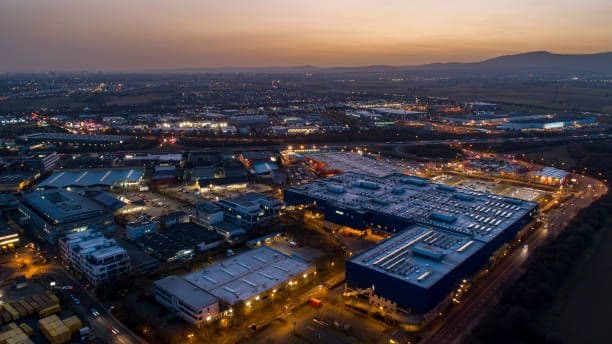
C&I businesses tend to use large amounts of electricity. They are increasingly focused on ensuring they have a reliable energy supply at an affordable price.
To meet the growing demand for electricity, utilities are largely relying on what they’ve relied on for decades – fossil fuels. More gas-fired power plants are coming online and the phase-out timelines of old coal power plants are now being extended. While this will help us meet some of the upcoming demand, it is not a complete solution in and of itself.
Aside from the environmental concerns, reverting to fossil fuels does not address the problems we are facing when it comes to transmission and distribution as well as energy security. Although the US is a net exporter of fossil fuels, heavy reliance on fossil fuels poses several issues from an energy independence perspective. For instance, we rely on refineries around the world to process the crude oil we extract. So, the fuel we consume is often imported from outside the United States. Fuel prices are also set by OPEC, so they fluctuate considerably based on global events. This means that we have to deal with the consequences of price volatility.
To add to the complex problem we are facing, there are serious vulnerabilities in our grid infrastructure that leave us prone to cyberattacks. Many parts of the grid still rely on decades-old SCADA and industrial control systems. These systems were not designed with modern cybersecurity threats in mind. While they can be patched and updated, it’s incredibly difficult to keep old systems up-to-date with the rapidly changing cybersecurity standards of the modern era. The consequences of these vulnerabilities are magnified when you consider the fact that our electrical grids are relatively centralized – just one attack or system breakdown can result in power outages for thousands of people.
So, what can be done to meet the growing electricity demand while maintaining, if not improving, our cybersecurity standards? One logical response is decentralization. Bringing more distributed energy resources online serves to provide more resiliency to cyber threats while also allowing for the mass adoption of renewable energy sources like wind and solar. By generating and/or storing energy at the point of use (i.e. at manufacturing facilities, data centers, hospitals, etc.), energy users can mitigate risks and even produce their own energy in a cheap and environmentally friendly manner.
For instance, imagine you own a manufacturing facility that has 2-3 shifts a day. You need a reliable supply of power to keep your equipment running and maintain profitability. Each month you pay your electricity bill but you notice that your energy and demand charges are creeping upwards as more and more heavy energy users like data centers and EV charging stations come online. You also notice that you are dealing with black outs, voltage sags, and frequency drops more often, as the grid struggles to satisfy everyone’s energy needs. These problems are quickly rising to the top of your list of issues you need to deal with and you need to find an answer. What do you do?
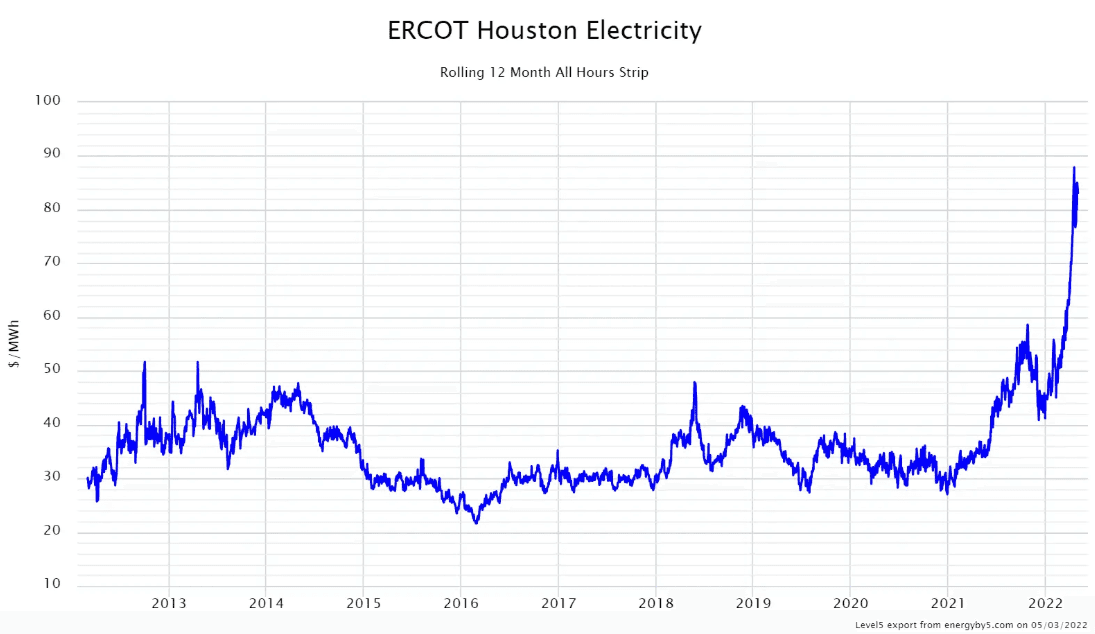
Houston is one of many industrial cities that are facing rising electricity prices.
More and more companies in this situation are opting to install solar panels and battery energy storage. Solar serves to decrease their energy costs, as every kWh of solar energy their facility is using is a kWh of energy they do not need to purchase from the grid. Batteries serve to decrease their demand charges, as peak shaving and time-of-use energy dispatch curb their facility’s grid draw during peak demand hours. Facilities are even able to create new revenue streams through selling power back to the grid, a practice commonly referred to as ancillary services.
By investing in distributed energy resources, companies are insulating themselves from the growing energy risk all businesses are now facing. You can take the first step towards protecting your business by participating in Alchemy Industrial’s free power quality study and getting a customized proposal for battery backup (with or without solar) at your facility. Alchemy Industrial will work with you to determine the best approach and can even provide energy-as-a-service – meaning you can get the benefits of battery energy storage at zero upfront cost. You simply pay for results through shared savings and revenues. Get in touch with us today to take the first step towards energy independence.